Yes, you can sue someone for not having car insurance after an accident. However, the process can be more complicated than suing an insured driver. This article explores your legal options, potential challenges, and how to navigate the complexities of an uninsured driver lawsuit.
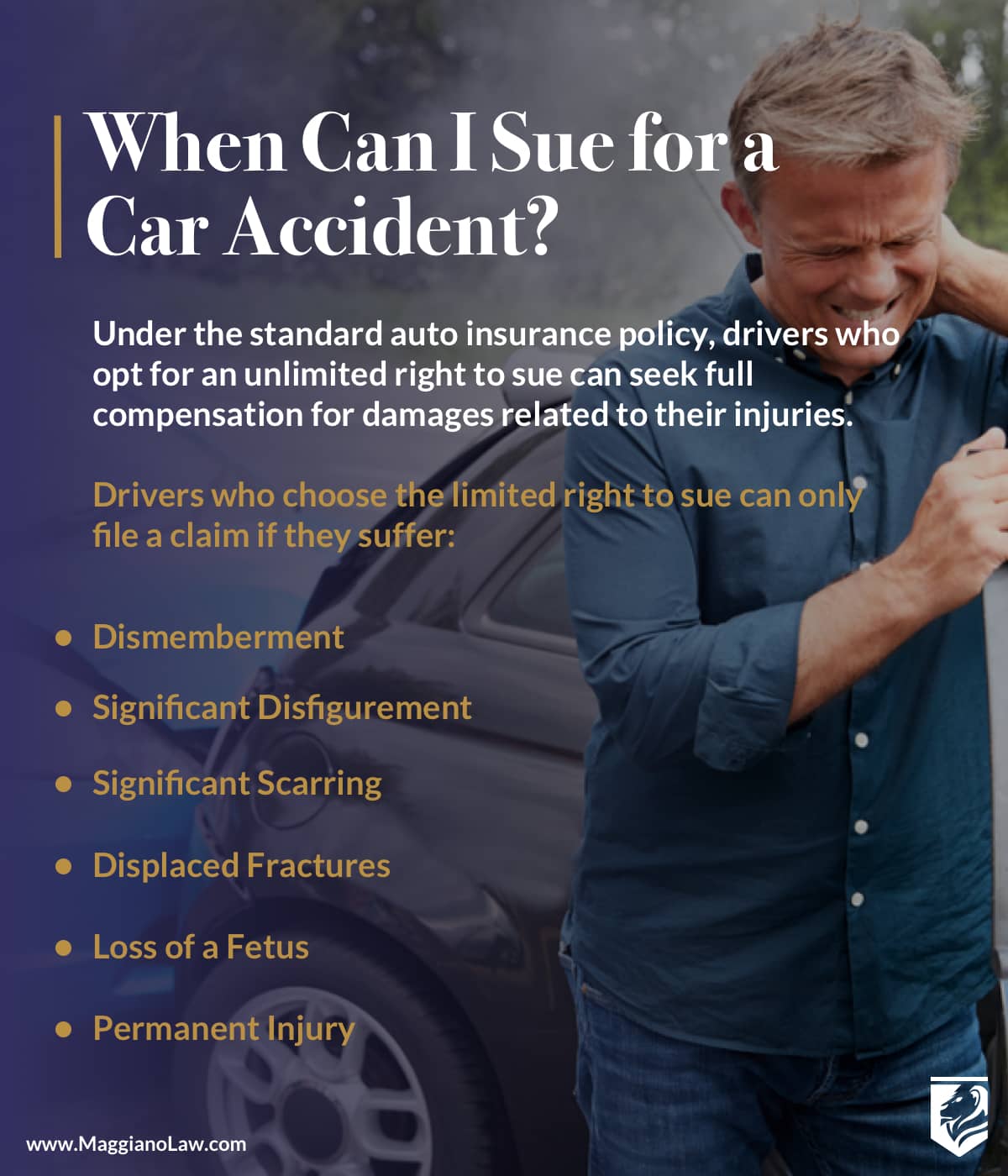
Image Source: www.maggianolaw.com
The Aftermath of an Accident With an Uninsured Driver
Being involved in a car accident is stressful enough, but discovering the at-fault driver has no insurance adds another layer of frustration and uncertainty. How will your medical bills be paid? Who will cover the damage to your vehicle? These are valid concerns, and it’s crucial to understand your rights and the steps you can take to recover damages.
Initial Steps After an Uninsured Car Accident
Following an uninsured car accident claim, immediately take these steps:
- Ensure Safety: Check yourself and any passengers for injuries. If necessary, call for medical assistance.
- Call the Police: Always report the accident to the police, even if it seems minor. A police report is vital for insurance claims and potential legal action.
- Gather Information: Exchange information with the other driver, including their name, contact details, vehicle information, and driver’s license number. Even if they claim to be uninsured, get as much information as possible.
- Document the Scene: Take photos and videos of the accident scene, including vehicle damage, road conditions, and any visible injuries.
- Contact Your Insurance Company: Notify your insurance company about the accident, even if you weren’t at fault. They can guide you through the claims process and inform you about your coverage options.
- Seek Medical Attention: Even if you feel fine, see a doctor as soon as possible. Some injuries may not be immediately apparent.
Why Suing an Uninsured Driver Can Be Challenging
While you have the right to pursue a personal injury uninsured driver lawsuit, several factors can make it more difficult than suing an insured driver.
- Difficulty Recovering Damages: The biggest challenge is often the uninsured driver’s lack of assets. Even if you win a judgment against them, collecting the money can be difficult if they have limited income or assets.
- Determining Fault: Establishing fault is crucial in any car accident case. You must prove that the uninsured driver was negligent and their negligence caused your injuries and damages.
- Legal Costs: Suing anyone can be expensive. Court fees, attorney fees, and other costs can add up quickly.
Your Legal Options: Pursuing Compensation
Despite the challenges, there are several avenues you can explore to recover damages after an accident with an uninsured driver.
1. Uninsured Motorist Coverage
Many insurance policies include uninsured motorist coverage lawsuit (UM). This coverage protects you if you’re injured by an uninsured driver or in a hit-and-run accident.
- What it Covers: UM coverage typically pays for your medical expenses, lost wages, and pain and suffering. Some policies also include property damage coverage.
- How it Works: You file a claim with your own insurance company, and they handle the claim as if they were the at-fault driver’s insurance company.
- Policy Limits: UM coverage has policy limits, which are the maximum amount your insurance company will pay. Make sure you are aware of your policy limits and consider purchasing adequate coverage.
- Importance of UM Coverage: Having UM coverage is crucial, especially in states with a high percentage of uninsured drivers. It provides a safety net if you’re injured by someone without insurance.
UM Coverage vs. Underinsured Motorist Coverage
It’s important to differentiate between UM coverage and underinsured motorist (UIM) coverage. UM coverage applies when the at-fault driver has no insurance. UIM coverage applies when the at-fault driver has insurance, but their policy limits are insufficient to cover your damages. Both types of coverage can be valuable in protecting you after an accident.
2. Personal Injury Protection (PIP)
In some states, called “no-fault” states, insurance policies include Personal Injury Protection (PIP) coverage. PIP coverage pays for your medical expenses and lost wages, regardless of who was at fault for the accident.
- Benefits of PIP: PIP coverage can provide quick access to medical care and lost wage benefits, regardless of fault.
- Limitations of PIP: PIP coverage typically has policy limits and may not cover all of your damages, such as pain and suffering.
- Impact on Lawsuits: In some no-fault states, you may be restricted from suing the at-fault driver unless your injuries meet certain thresholds.
3. Suing the Uninsured Driver Directly
As mentioned earlier, you can sue the uninsured driver directly to seek uninsured accident compensation.
- When to Consider Suing: Suing may be worthwhile if the uninsured driver has assets that can be seized to satisfy a judgment. This might include real estate, savings accounts, or valuable personal property.
- Legal Process: The process involves filing a lawsuit, serving the driver with a summons and complaint, gathering evidence, and potentially going to trial.
- Challenges of Suing: As mentioned earlier, collecting on a judgment can be difficult, even if you win the case. You also have to consider the costs associated with pursuing a lawsuit.
4. Other Potential Sources of Compensation
Depending on the circumstances of the accident, other sources of compensation may be available.
- Employer’s Insurance: If you were driving for work at the time of the accident, your employer’s insurance policy may provide coverage.
- Umbrella Policy: If you have an umbrella insurance policy, it may provide additional coverage above and beyond your auto insurance policy.
- Government Programs: You may be eligible for government programs such as Medicaid or Medicare to help cover your medical expenses.
Proving Negligence in an Uninsured Driver Lawsuit
To win an uninsured driver lawsuit, you must prove that the uninsured driver was negligent and their negligence caused your injuries and damages.
Elements of Negligence
To prove negligence, you must establish the following elements:
- Duty of Care: The driver had a duty to exercise reasonable care while operating their vehicle.
- Breach of Duty: The driver breached their duty of care by acting negligently. This could include speeding, running a red light, or driving under the influence.
- Causation: The driver’s negligence directly caused your injuries and damages.
- Damages: You suffered actual damages, such as medical expenses, lost wages, and pain and suffering.
Evidence to Support Your Claim
Gathering evidence is crucial to prove negligence. This might include:
- Police Report: The police report is a valuable source of information about the accident, including the officer’s findings regarding fault.
- Witness Statements: Statements from witnesses who saw the accident can help establish what happened.
- Photos and Videos: Photos and videos of the accident scene, vehicle damage, and your injuries can provide compelling evidence.
- Medical Records: Medical records document your injuries and the treatment you received.
- Expert Testimony: In some cases, you may need to hire an expert, such as an accident reconstructionist, to testify about the cause of the accident.
Recovering Damages: What You Can Claim
In an uninsured motorist coverage lawsuit, you can seek compensation for a variety of damages.
Types of Damages
- Medical Expenses: This includes all medical bills related to your injuries, such as doctor visits, hospital stays, physical therapy, and medication.
- Lost Wages: You can recover lost wages if you were unable to work due to your injuries.
- Pain and Suffering: This includes compensation for the physical pain and emotional distress you experienced as a result of the accident.
- Property Damage: This covers the cost of repairing or replacing your vehicle.
- Other Expenses: You may also be able to recover other expenses related to the accident, such as rental car costs or transportation expenses.
Calculating Damages
Calculating damages can be complex. It’s important to keep detailed records of all your expenses and losses.
- Medical Expenses: Keep copies of all medical bills and records.
- Lost Wages: Obtain documentation from your employer verifying your lost wages.
- Pain and Suffering: There is no set formula for calculating pain and suffering, but factors such as the severity of your injuries, the length of your recovery, and the impact on your life will be considered.
- Property Damage: Obtain estimates for repairing or replacing your vehicle.
Navigating the Legal Process: What to Expect
Pursuing a claim against an uninsured driver can be a lengthy and complex process.
Hiring an Attorney
It’s highly recommended that you hire an experienced personal injury attorney to represent you in an uninsured driver lawsuit. An attorney can:
- Investigate the Accident: An attorney can investigate the accident and gather evidence to support your claim.
- Negotiate with the Insurance Company: An attorney can negotiate with the insurance company on your behalf to reach a fair settlement.
- File a Lawsuit: If a settlement cannot be reached, an attorney can file a lawsuit and represent you in court.
- Provide Legal Advice: An attorney can provide you with legal advice and guidance throughout the process.
The Lawsuit Process
If you file a lawsuit, the process typically involves the following steps:
- Filing a Complaint: The lawsuit begins with filing a complaint in court. The complaint states the facts of the case and the damages you are seeking.
- Serving the Defendant: The defendant (the uninsured driver) must be served with a copy of the complaint and a summons.
- Answer: The defendant has a certain amount of time to file an answer to the complaint. The answer either admits or denies the allegations in the complaint.
- Discovery: The discovery phase involves gathering evidence through interrogatories (written questions), depositions (oral examinations), and requests for documents.
- Mediation: Many cases are referred to mediation, where a neutral third party attempts to help the parties reach a settlement.
- Trial: If a settlement cannot be reached, the case will proceed to trial. At trial, the parties will present evidence to a judge or jury, who will decide the case.
Potential Challenges and How to Overcome Them
There are several challenges you may face in recovering damages uninsured driver.
Challenge: Difficulty Collecting on a Judgment
Even if you win a judgment against the uninsured driver, collecting the money can be difficult.
- Solution: Your attorney can help you explore options for collecting on the judgment, such as garnishing the driver’s wages or seizing their assets.
Challenge: Proving Negligence
Proving negligence can be challenging, especially if there were no witnesses to the accident.
- Solution: Gather as much evidence as possible, including the police report, photos and videos, and expert testimony.
Challenge: Insurance Company Disputes
Your own insurance company may dispute your claim for uninsured motorist coverage.
- Solution: Hire an attorney to represent you and negotiate with the insurance company.
Fathoming State Laws: Variations in UM Coverage
State laws regarding uninsured motorist coverage vary widely. Some states require UM coverage, while others do not. The minimum coverage limits also vary by state. It’s important to know the laws in your state.
Key Differences in State Laws
- Mandatory vs. Optional Coverage: Some states require drivers to carry UM coverage, while others make it optional.
- Minimum Coverage Limits: The minimum coverage limits for UM coverage vary by state.
- “Add-On” vs. “Reduce” States: Some states are “add-on” states, where UM coverage is added to the at-fault driver’s liability coverage. Other states are “reduce” states, where UM coverage is reduced by the amount of the at-fault driver’s liability coverage.
Table: Uninsured Motorist Coverage Requirements by State (Example)
| State | UM Coverage Required? | Minimum Coverage Limits |
|---|---|---|
| California | Yes | \$15,000 per person / \$30,000 per accident for bodily injury |
| Texas | No | Not Applicable (Optional Coverage) |
| Florida | No | Not Applicable (Optional Coverage) |
| New York | Yes | \$25,000 per person / \$50,000 per accident for bodily injury; \$10,000 for property damage |
Note: This table is for illustrative purposes only and may not be entirely accurate. Consult with a legal professional for the most up-to-date information on your state’s UM coverage requirements.
Alternatives to Suing: Other Avenues for Assistance
Exploring legal options uninsured driver cases also includes looking beyond lawsuits.
State Victim Compensation Funds
Some states have victim compensation funds that provide financial assistance to victims of crime, including car accident victims. These funds can help cover medical expenses, lost wages, and other expenses.
Charitable Organizations
Various charitable organizations offer assistance to car accident victims. These organizations may provide financial assistance, counseling services, or legal aid.
Preventing Future Issues: Increasing Your Protection
You can take steps to protect yourself financially in case you are involved in a future accident.
Increase Your Uninsured Motorist Coverage
Consider purchasing higher limits of UM coverage. While it may increase your premium, the extra protection can be invaluable if you’re seriously injured by an uninsured driver.
Obtain an Umbrella Insurance Policy
An umbrella policy provides additional liability coverage above and beyond your auto and homeowners insurance policies. This can protect your assets if you’re sued for damages exceeding your policy limits.
Conclusion: Protecting Your Rights After an Uninsured Accident
Dealing with an uninsured driver after a car accident presents many challenges. While suing uninsured driver is an option, it’s crucial to explore all available avenues for compensation, including uninsured motorist coverage, personal injury protection, and other potential sources. Consulting with an experienced personal injury attorney is highly recommended to protect your rights and maximize your chances of recovering damages. Don’t let the lack of insurance deter you from seeking the compensation you deserve. By knowing your rights and understanding the legal options uninsured driver cases present, you can navigate the complexities of this situation and work towards a just resolution.
Frequently Asked Questions (FAQ)
Q: What is uninsured motorist property damage coverage?
A: Uninsured Motorist Property Damage (UMPD) coverage pays for the damage to your vehicle caused by an uninsured driver. Not all states require UMPD coverage, and it may have a deductible.
Q: Can I sue after a car accident without insurance?
A: Yes, even if you don’t have car insurance, you can still sue the at-fault driver for damages. However, depending on the state, being uninsured yourself might limit your ability to recover certain damages, such as pain and suffering. Check state laws for specifics.
Q: Who is responsible for medical bills in an uninsured car accident?
A: Responsibility depends on the situation and your insurance coverage. Options include:
* Your own health insurance.
* Personal Injury Protection (PIP) coverage (if available in your state).
* Uninsured Motorist (UM) coverage.
* Suing the uninsured driver directly.
Q: What if the uninsured driver leaves the scene of the accident (hit-and-run)?
A: If the uninsured driver is a hit-and-run driver, report the accident to the police immediately. Your uninsured motorist coverage should cover your damages in this scenario.
Q: How long do I have to file a lawsuit after an uninsured car accident?
A: The statute of limitations for filing a lawsuit varies by state. It’s crucial to consult with an attorney as soon as possible to ensure you don’t miss the deadline.
Q: What are the legal options uninsured driver presents when the accident was partially my fault?
A: Even if you were partially at fault, you may still be able to recover some damages. Many states follow the rule of comparative negligence, which means your recovery will be reduced by your percentage of fault. If you are more than 50% at fault, you may not be able to recover anything.
Q: If I win a judgment against an uninsured driver, what legal options uninsured driver presents for enforcement?
A: Enforcement options include:
* Wage garnishment.
* Bank levy (seizing funds from bank accounts).
* Lien on property (real estate, vehicles).
* Seizure of personal property.
* Examination of the debtor (to discover assets).
Q: Is it worth suing an uninsured driver with no assets?
Navigating a legal battle against an uninsured driver, especially one with scant assets, is a tough call. Even if you emerge victorious, the reality of actually recouping your losses can be a significant hurdle. Weigh the substantial legal expenses against the slim prospects of recovery. It’s crucial to consult with an attorney who can realistically assess your chances of collecting damages and explore any available legal avenues unique to these challenging uninsured driver situations.

Hi, I’m Luigi Smith, the voice behind carrepairmag.com. As a passionate car enthusiast with years of hands-on experience in repairing and maintaining vehicles, I created this platform to share my knowledge and expertise. My goal is to empower car owners with practical advice, tips, and step-by-step guides to keep their vehicles running smoothly. Whether you’re a seasoned mechanic or a beginner looking to learn, carrepairmag.com is your go-to source for all things car repair!