What do you need to do after buying a used car? You need to take several steps to ensure its roadworthiness, legal compliance, and your peace of mind. This post-purchase checklist will guide you through everything, from inspections to personalization.
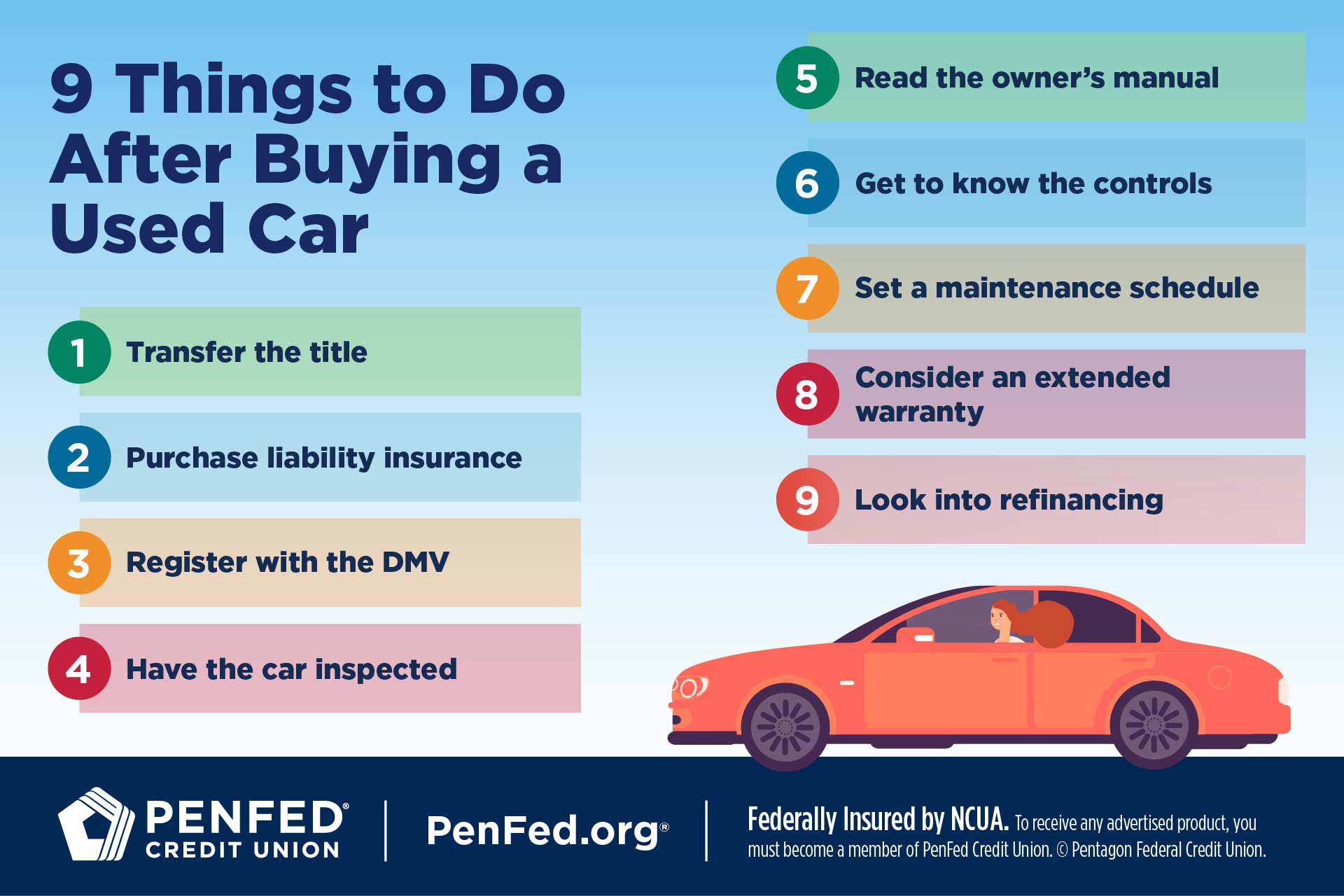
Image Source: www.penfed.org
Securing the Legalities: Title and Registration
The legal aspects of buying a used car are crucial. Don’t skip these steps!
Used Car Title Transfer: Making It Officially Yours
Transferring the title is the most important part of taking ownership. This proves you are now the legal owner of the car.
- Review the Title: Check for accuracy. Ensure the seller’s information matches their ID and that there are no liens (debts) on the title.
- Complete the Transfer: The seller needs to sign the title over to you. Both you and the seller usually need to fill out specific sections on the title.
- Submit the Paperwork: Take the completed title and any required forms to your local Department of Motor Vehicles (DMV) or equivalent agency. Some states allow online submissions.
- Pay the Fees: Title transfer fees vary by state. Be prepared to pay these at the DMV.
Used Car Registration Process: Making It Legal on the Road
Registering your used car is essential to drive it legally.
- Gather Required Documents: You’ll typically need the transferred title, proof of insurance, and your driver’s license. Some states require a vehicle inspection certificate.
- Visit the DMV: Head to your local DMV or equivalent agency to complete the registration process.
- Complete the Application: Fill out the registration application accurately.
- Pay the Fees: Registration fees vary based on your state and the car’s value or weight.
- Receive Your Registration: Once everything is processed, you’ll receive your registration card and license plates (if applicable).
- Display Your Plates: Properly attach your new license plates to your car.
Used Car Insurance Options: Protecting Your Investment
Getting insurance is not just a legal requirement; it protects you financially in case of an accident.
- Research Different Policies: Compare quotes from various insurance providers. Consider liability, collision, and comprehensive coverage.
- Consider Your Needs: Choose a policy that matches your driving habits and risk tolerance.
- Provide Accurate Information: Give correct details about your car and driving history for accurate quotes.
- Obtain Proof of Insurance: Get proof of insurance to present during the registration process.
Ensuring Roadworthiness: Inspections and Maintenance
Before hitting the road, make sure your used car is safe and reliable.
Used Car Inspection Checklist: Identifying Potential Problems
A thorough inspection can reveal hidden problems.
- Visual Inspection: Look for any obvious damage, such as dents, scratches, or rust. Check the tires for wear and tear.
- Under the Hood: Inspect the engine for leaks, worn belts, and hose damage. Check fluid levels (oil, coolant, brake fluid, power steering fluid, and windshield washer fluid).
- Interior Check: Test all lights, including headlights, taillights, brake lights, and turn signals. Check the functionality of the wipers, horn, and all electrical systems.
- Test Drive: Pay attention to how the car handles, brakes, and accelerates. Listen for unusual noises.
Professional Inspection
- Find a Trusted Mechanic: Choose a certified mechanic with experience in used car inspections.
- Schedule an Inspection: Make an appointment for a pre-purchase inspection, even after you buy the car. It’s better to know about any issues early on.
- Review the Report: Discuss the inspection report with the mechanic. Ask questions about any potential problems and estimated repair costs.
Essential Used Car Repairs: Addressing Immediate Needs
Based on the inspection, prioritize any necessary repairs.
- Brakes: Faulty brakes are a safety hazard. Replace worn brake pads, rotors, or calipers immediately.
- Tires: Worn tires can affect handling and increase the risk of accidents. Replace tires with low tread or sidewall damage.
- Fluids: Change all fluids (oil, coolant, transmission fluid, brake fluid) to ensure optimal performance.
- Belts and Hoses: Replace any cracked or worn belts and hoses to prevent engine failure.
- Suspension: Address any issues with the suspension system to ensure a smooth and safe ride.
Used Car Maintenance Schedule: Keeping Your Car in Top Shape
Regular maintenance is key to extending the life of your used car.
- Oil Changes: Follow the manufacturer’s recommended oil change intervals.
- Fluid Checks: Regularly check and top off all fluid levels.
- Tire Rotation: Rotate tires every 6,000 to 8,000 miles to ensure even wear.
- Air Filter Replacement: Replace the air filter every 12,000 to 15,000 miles.
- Spark Plug Replacement: Replace spark plugs according to the manufacturer’s recommendations.
- Timing Belt Replacement: Replace the timing belt at the recommended interval to prevent engine damage.
Creating a Maintenance Log
- Keep Records: Maintain a record of all maintenance and repairs performed on your car.
- Follow the Schedule: Adhere to the manufacturer’s recommended maintenance schedule.
- Set Reminders: Use a calendar or app to remind you of upcoming maintenance tasks.
Addressing Potential Issues: Hidden Problems and Warranty Options
Even with an inspection, some problems might remain hidden.
Hidden Used Car Problems: What to Watch Out For
Be aware of potential issues that might not be immediately apparent.
- Electrical Issues: Problems with the car’s electrical system can be difficult to diagnose. Watch out for flickering lights, malfunctioning sensors, or battery drain.
- Transmission Problems: Slipping gears, rough shifting, or unusual noises can indicate transmission problems.
- Rust: Rust can weaken the car’s structure. Check for rust on the undercarriage, around the wheel wells, and in the engine compartment.
- Frame Damage: Look for signs of frame damage, which can affect the car’s handling and safety.
- Odometer Tampering: Be wary of odometer tampering, which can hide the car’s true mileage.
Used Car Extended Warranty: Protecting Against Unexpected Costs
Consider purchasing an extended warranty for added protection.
- Research Warranty Providers: Compare warranties from different providers.
- Assess Your Needs: Choose a warranty that covers the components most likely to fail.
- Read the Fine Print: Carefully review the terms and conditions of the warranty before purchasing.
- Consider the Cost: Weigh the cost of the warranty against the potential repair costs.
Personalizing Your Ride: Making It Your Own
Now for the fun part: customizing your used car to fit your style.
Used Car Detailing Services: Giving Your Car a Fresh Look
A professional detailing can make your used car look and feel new.
- Exterior Detailing: Includes washing, waxing, and polishing the car’s exterior.
- Interior Detailing: Includes cleaning and conditioning the interior surfaces, such as seats, carpets, and dashboard.
- Engine Detailing: Includes cleaning the engine compartment to remove dirt and grime.
Personalize Used Car Accessories: Enhancing Comfort and Style
Add accessories to personalize your car and enhance your driving experience.
- Floor Mats: Protect your car’s carpets from dirt and wear.
- Seat Covers: Add style and protect your seats from damage.
- Steering Wheel Cover: Enhance grip and comfort.
- Audio System: Upgrade your car’s audio system for better sound quality.
- GPS Navigation: Add a GPS navigation system for easy directions.
- Dash Cam: Record your drives for added safety and security.
- Window Tinting: Reduce glare and protect your car’s interior from UV rays.
FAQ: Answering Your Questions
- What is the first thing I should do after buying a used car? The first thing is to secure insurance. You can’t legally drive without it.
- Can I return a used car after buying it? In most cases, no. Used car sales are usually “as-is,” unless the dealer offers a return policy or the car has significant undisclosed problems.
- Who is responsible for transferring the title after buying a used car? Both the buyer and seller are responsible. The seller must sign the title over, and the buyer must submit it to the DMV.
Snagging a pre-owned car is a savvy money-saver, but it demands a keen eye. This post-acquisition roadmap will steer you toward a used vehicle that’s not only road-ready and dependable but also perfectly legal. We’ll cover everything from essential checks and upkeep to making it truly your own, ensuring you’ll be cruising in your “new” wheels with confidence for a long time.

Hi, I’m Luigi Smith, the voice behind carrepairmag.com. As a passionate car enthusiast with years of hands-on experience in repairing and maintaining vehicles, I created this platform to share my knowledge and expertise. My goal is to empower car owners with practical advice, tips, and step-by-step guides to keep their vehicles running smoothly. Whether you’re a seasoned mechanic or a beginner looking to learn, carrepairmag.com is your go-to source for all things car repair!