Do police have a right to search your car? The answer is not always a simple “yes” or “no.” Generally, police need a warrant to search your car. However, there are several exceptions to this rule. This article explains your rights and what to do if a police officer searches your vehicle.
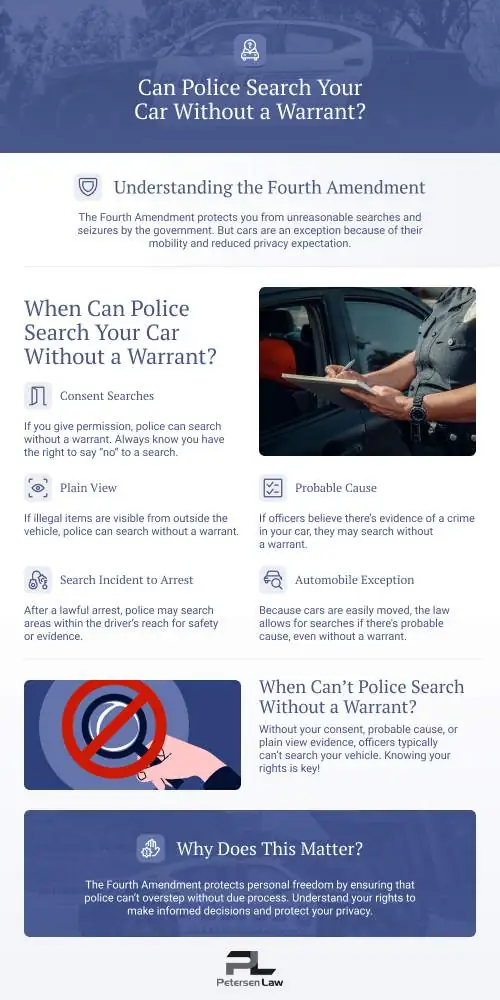
Image Source: www.criminaldefensene.com
Fathoming Vehicle Search Laws
The Fourth Amendment to the U.S. Constitution protects you from unreasonable searches and seizures. This means the police generally need a warrant before they can search your property, including your car. A warrant is a legal document issued by a judge that authorizes law enforcement to conduct a search. To get a warrant, police must demonstrate probable cause – a reasonable belief that evidence of a crime will be found.
What is Probable Cause?
Probable cause is more than just a hunch or suspicion. It requires specific facts and circumstances that would lead a reasonable person to believe that a crime has been committed or is being committed, and that evidence related to the crime is located in the place to be searched.
Exceptions to the Warrant Requirement
While a warrant is generally required for a car search, there are several well-established exceptions.
- Consent: If you voluntarily give the police permission to search your car, they do not need a warrant.
- Plain View: If the police see evidence of a crime (e.g., drugs, weapons) in plain view inside your car while they are legally present (e.g., during a traffic stop), they can seize the evidence and search the car.
- Search Incident to Arrest: If the police arrest you, they can search your car as part of the arrest, but only if you are within reaching distance of the passenger compartment during the arrest, or if there is probable cause to believe the car contains evidence related to the crime for which you were arrested.
- Automobile Exception: This is a major exception. If the police have probable cause to believe that your car contains contraband or evidence of a crime, they can search it without a warrant. This exception is based on the idea that cars are mobile and evidence could be easily moved before a warrant can be obtained.
- Exigent Circumstances: If there is an emergency situation where waiting to get a warrant could lead to the destruction of evidence or danger to the public, the police can search your car without a warrant.
- Inventory Search: After lawfully impounding a vehicle, police can conduct an inventory search of the vehicle to document its contents. This search must be conducted according to standard procedures.
The Automobile Exception to Warrant
The automobile exception allows a vehicle search if police have probable cause to believe it holds evidence of a crime. The reasoning behind this exception is that cars are mobile. Evidence can disappear quickly if police have to spend time getting a warrant.
Scope of the Automobile Exception
The scope of the search allowed under the automobile exception is limited to the areas where the police have probable cause to believe the evidence is located. For example, if police have probable cause to believe that a car contains illegal drugs, they can search the trunk, glove compartment, and any containers within the car that could reasonably hold drugs.
Consent to Search Vehicle
Giving police permission to search your car is a waiver of your Fourth Amendment rights. Any evidence found during the search can be used against you.
Why You Should Be Cautious About Consenting
It is generally advisable to politely decline a request to search your car unless you are absolutely sure there is nothing illegal inside. Police are trained to ask for consent, even when they may not have probable cause.
How to Refuse Consent
If you do not want the police to search your car, you should clearly and unequivocally state that you do not consent to the search. It is best to do this verbally and calmly. For example, you can say, “Officer, I do not consent to a search of my vehicle.”
Reasonable Suspicion Car Search
While probable cause is required for the automobile exception, sometimes reasonable suspicion can justify a limited search.
What is Reasonable Suspicion?
Reasonable suspicion is a lower standard than probable cause. It means that the police have a reasonable belief, based on specific facts and circumstances, that criminal activity is afoot.
Terry Stops and Vehicle Searches
During a legal traffic stop (often called a “Terry stop”), if police have reasonable suspicion that you or someone in your car is armed and dangerous, they can conduct a limited search of the vehicle for weapons. This search is limited to areas where a weapon could be located.
Illegal Car Search: What It Looks Like
An illegal car search violates your Fourth Amendment rights. This can happen in several ways:
- Lack of Probable Cause or Reasonable Suspicion: The police search your car without probable cause or reasonable suspicion, and no exception to the warrant requirement applies.
- Coerced Consent: The police pressure you into consenting to a search by threats or intimidation.
- Exceeding the Scope of the Search: The police search areas of your car that are not related to the probable cause or reasonable suspicion that justified the search. For example, if the police are looking for a stolen television, they cannot legally search a small pill bottle.
- Unlawful Traffic Stop: The traffic stop itself is illegal (e.g., no valid reason for the stop), rendering any subsequent search unlawful.
Rights During Traffic Stop Search
You have specific rights during a traffic stop, even if the police want to search your car.
- Right to Remain Silent: You have the right to remain silent and not answer questions that could incriminate you.
- Right to Refuse Consent: You have the right to refuse to consent to a search of your car.
- Right to an Attorney: If you are arrested, you have the right to an attorney.
- Right to Record: In many states, you have the right to record your interactions with the police, as long as you are not interfering with their duties.
What to Do If Police Search Your Car
If the police search your car, here’s what you should do:
- Remain Calm and Polite: Do not argue with the police or physically resist the search.
- State You Do Not Consent: Clearly state that you do not consent to the search. Make sure your statement is clear and unambiguous.
- Observe the Search: Pay attention to what the police are doing during the search. Note any damage to your car or any items that are seized.
- Do Not Admit Guilt: Do not admit to anything or make any statements that could be used against you.
- Ask for Identification: Ask for the officer’s name and badge number.
- Document Everything: As soon as possible after the search, write down everything you remember about the incident, including the time, date, location, officers involved, and the details of the search.
- Contact an Attorney: Consult with a criminal defense attorney as soon as possible. An attorney can advise you on your rights and help you determine if the search was legal.
Challenging an Illegal Car Search
If you believe that the police illegally searched your car, you can challenge the search in court.
The Exclusionary Rule
The exclusionary rule prevents illegally obtained evidence from being used against you in court. If a court determines that the police violated your Fourth Amendment rights, any evidence found during the illegal search will be suppressed, meaning it cannot be used to convict you.
How to Suppress Evidence
Your attorney can file a motion to suppress the evidence obtained during the illegal search. The court will hold a hearing to determine whether the search was legal. If the court finds that the search was illegal, the evidence will be suppressed.
Table: Your Rights During a Car Search
| Right | Description |
|---|---|
| Right to Remain Silent | You do not have to answer questions that could incriminate you. |
| Right to Refuse Consent | You can refuse to allow the police to search your car. |
| Right to an Attorney | If you are arrested, you have the right to speak with an attorney. |
| Right to Record (In Many States) | You may be able to record your interaction with police, as long as it doesn’t interfere with their duties. Check your local laws. |
| Right to Document | Make detailed notes about the search, including time, location, officers involved, and what happened. |
Table: Exceptions to the Warrant Requirement for Car Searches
| Exception | Description |
|---|---|
| Consent | You voluntarily give the police permission to search your car. |
| Plain View | The police see evidence of a crime in plain view inside your car. |
| Search Incident to Arrest | The police arrest you and search your car as part of the arrest (limited circumstances). |
| Automobile Exception | The police have probable cause to believe your car contains contraband or evidence of a crime. |
| Exigent Circumstances | An emergency situation exists where waiting for a warrant could lead to the destruction of evidence or danger to the public. |
| Inventory Search | After lawfully impounding a vehicle, police can conduct an inventory search of the vehicle to document its contents following standard procedures. |
Frequently Asked Questions (FAQ)
- Can police search my car if they smell marijuana? It depends. In some states where marijuana is legal, the smell of marijuana alone may not be enough to establish probable cause for a search. However, in states where marijuana is illegal, the smell can be used as probable cause.
- What if the police find something illegal during an illegal search? Even if the police find illegal items, if the search itself was illegal, the evidence may be suppressed in court. This means it cannot be used against you.
- Can I sue the police if they illegally search my car? You may be able to sue the police for violating your Fourth Amendment rights. Consult with an attorney to discuss your options.
- If I am a passenger in a car, do I have the same rights? Yes, as a passenger, you also have Fourth Amendment rights. The police cannot search your belongings inside the car without probable cause or your consent.
Conclusion
Navigating a traffic stop or car search becomes far smoother, and often with a more favorable result, when you understand your legal standing. While law enforcement typically requires a warrant to delve into your vehicle, several exceptions can allow for searches without one. Arming yourself with this knowledge and confidently asserting your constitutional protections, particularly those enshrined in the Fourth Amendment, is your best defense against unlawful intrusions. Should you feel your rights have been infringed upon, prompt consultation with an attorney is crucial.

Hi, I’m Luigi Smith, the voice behind carrepairmag.com. As a passionate car enthusiast with years of hands-on experience in repairing and maintaining vehicles, I created this platform to share my knowledge and expertise. My goal is to empower car owners with practical advice, tips, and step-by-step guides to keep their vehicles running smoothly. Whether you’re a seasoned mechanic or a beginner looking to learn, carrepairmag.com is your go-to source for all things car repair!